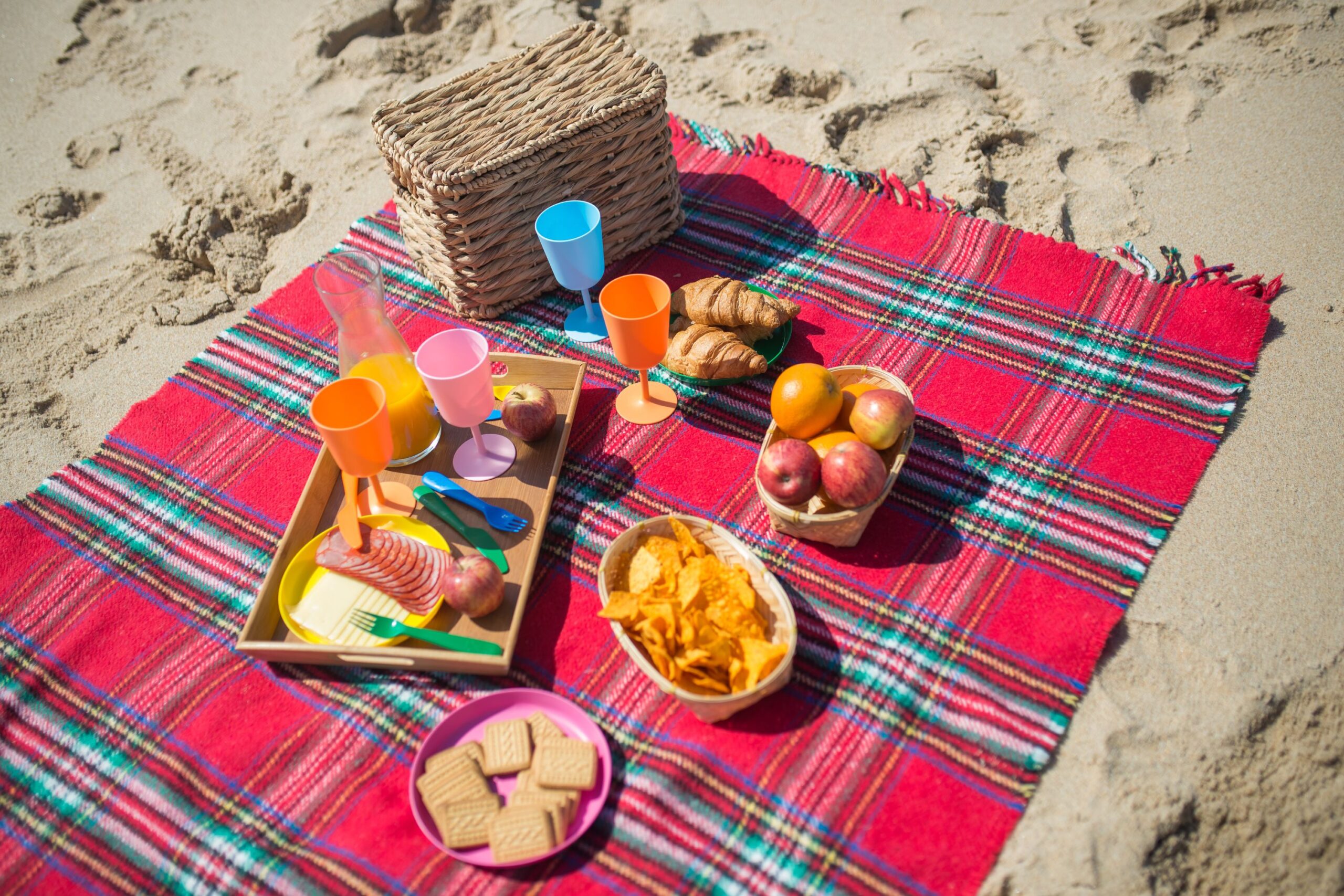
How to Choose the Best Picnic Blanket
A picnic blanket is a foundation of your outdoor setup. It creates a clean, dry, and comfortable base for food, drinks, and socializing. Without it, damp grass, rough sand, or dusty ground can quickly ruin the experience.
A well-chosen blanket protects you from moisture, dirt, and insects while clearly marking your space. It also reduces cleanup time and makes the entire outing feel more organized.
This is why many travelers rank a picnic blanket alongside a cooler or basket as a core picnic essential.
From casual park lunches to long beach days, the right blanket improves comfort and convenience.
Seam-sealed edges and reinforced stitching prevent wear, while water-resistant backings guard against ground moisture.
Choosing carefully means you’ll avoid the common issue of soggy fabric or torn seams halfway through your picnic season.
How to Choose a Picnic Blanket by Material and Durability
The material of a picnic blanket determines both its comfort and its lifespan. A blanket made from lightweight fabrics is easier to pack and carry, but heavier-duty materials stand up better to regular use on rough or damp ground.
Choosing the right balance depends on where and how often you plan to use it.
Polyester and Synthetic Blends
Polyester (300D–600D) is one of the most reliable options. It resists tears, dries quickly, and doesn’t hold onto dirt. Higher-denier counts mean greater strength and abrasion resistance, which is ideal for rocky terrain or repeated folding.
Polyester picnic blankets are also easy to wipe clean, making them practical for beach trips or family outings.
Canvas and Cotton Fabrics
Canvas or heavy cotton blends provide a rugged, natural feel. These are thicker and more durable against friction, but they weigh more and take longer to dry after coming into contact with moisture.
Canvas blankets are best for longer picnics in dry weather or for those who prefer traditional, hard-wearing materials.
Fleece and Microfiber Tops
For comfort, fleece and microfiber tops are soft on the skin and retain warmth in cooler conditions. They make sitting on grass or cold ground more pleasant. While not as resistant to dirt as polyester, they add insulation and pair well with waterproof backings.
Waterproof Backings
The bottom layer is just as important. PVC, PEVA, or TPU coatings prevent moisture from seeping through. TPU is especially valued for being lightweight, flexible, and more eco-friendly compared to older PVC options.
These backings protect against wet grass, damp soil, or sand while enhancing the overall durability of the structure.
Construction and Reinforcement
Durability also depends on construction quality. Look for:
- Double-stitched seams to prevent fraying.
- Bound edges that keep layers intact.
- Reinforced corners to resist pulling and folding stress.
These details significantly extend the usable life of your picnic blanket.
Eco-Friendly Alternatives
Sustainability is now a priority for many buyers. Recycled PET fabrics, organic cotton, and cork-backed picnic blankets are increasingly available. They offer reliable performance while reducing environmental impact.
When labeled with certifications like OEKO-TEX, these options combine comfort with non-toxic and eco-conscious materials.
Best Balance for Travelers
For frequent travelers or families who require a versatile option, a mid-weight polyester or fleece top paired with a TPU waterproof backing strikes the ideal balance. It provides comfort, weather resistance, and durability without adding unnecessary bulk to your picnic gear.
Comparing Picnic Blanket Types and Uses
| Material Type | Pros | Cons | Best Use Case |
| Polyester (300D–600D) | Tear-resistant, lightweight, quick-drying, easy to clean | Less insulating in cold weather | Parks, beaches, everyday use |
| Canvas / Heavy Cotton | Rugged, durable, natural feel, resists abrasion | Heavier, slower to dry, bulky to carry | Dry climates, traditional look, family gatherings |
| Fleece / Microfiber Tops | Soft, warm, comfortable on skin, good insulation | Can attract dirt, less resistant to rough ground | Cool evenings, autumn picnics, camping |
| Waterproof Backings (TPU, PEVA, PVC) | Blocks moisture, easy to wipe clean, adds durability | Can feel stiff if not paired with soft top | Wet grass, damp soil, beach trips |
| Wool Blends | Excellent warmth, natural insulation, classic style | Heavier, requires careful cleaning, less compact | Cold climates, outdoor concerts, late-night use |
| Eco-Friendly (Recycled PET, Organic Cotton, Cork-Backed) | Sustainable, safe materials, growing variety available | May cost more, sometimes less compact | Buyers prioritizing sustainability, eco-conscious travel |
What Size and Weight of Picnic Blanket Is Best for Your Needs?
The size and weight of a picnic blanket significantly impact its comfort and practicality when carrying it. A blanket that’s too small can leave little space for food and movement, while an oversized one may be difficult to fold and transport.
The right balance ensures both comfort and portability of your blanket.
Recommended Sizes by Group
- For 2 people: A 3 × 5 ft (90 × 150 cm) blanket provides enough room for two adults and a small spread of food.
- For 3 – 4 people: A 4 × 6 ft (120 × 180 cm) option works well for couples with children or small groups of friends.
- For families or larger groups: 5 × 7 ft (150 × 210 cm) or bigger ensures enough space for everyone to sit comfortably, plus extra room for bags, baskets, and coolers.
Choosing the correct dimensions prevents the need to bring multiple blankets and keeps the group together in one space.
Ideal Weight for Portability
Weight matters when you’re walking to a park, carrying gear to a beach, or hiking to a picnic spot. A blanket should ideally weigh under 3 lb (1.4 kg) to stay portable.
Compact folding models often pack down to about 12 × 8 inches, making them small enough to slip into a backpack or tote. Roll-up designs with built-in straps or handles also reduce bulk, making carrying easier.
Balancing Comfort and Convenience
If you usually picnic close to your car, a larger and slightly heavier blanket offers more comfort. However, if you’re hiking, biking, or traveling by public transportation, opt for a lightweight, compact blanket that fits easily alongside your other essentials.
By aligning size with group needs and weight with your travel style, you’ll end up with a picnic blanket that feels both practical and comfortable in any setting.
How Do Portability and Packability Affect the Choice of a Picnic Blanket?
A picnic blanket should be as easy to carry as it is to use. Portability and packability make the difference between a blanket you reach for every weekend and one that stays stored away.
When you’re walking long distances, cycling, or juggling extra items like coolers and chairs, a compact and well-designed blanket saves effort and frustration.
Features That Improve Portability
The best picnic blankets fold or roll into a manageable size and include built-in carrying systems. Look for:
- Integrated straps or Velcro closures that keep the blanket secured after folding.
- Carrying pouches that protect the fabric and make transport cleaner.
- Detachable shoulder straps or backpack-style handles that free your hands when carrying other gear.
These features reduce bulk, allowing you to carry the blanket comfortably to your picnic spot.
Best Options for Active Travelers
- Hikers and cyclists: Compact roll-up styles are superior to bulky foldable mats. They attach easily to backpacks and don’t take up much space.
- Beachgoers: Lightweight synthetic fabrics prevent sand from sticking and make it easier to shake off debris. They also dry faster after contact with water.
- Families with kids: Larger blankets with attached carrying handles or zippered cases help organize items while keeping the blanket portable.
Why Packability Matters
A blanket that doesn’t fold well or feels too heavy often gets left behind. By contrast, a lightweight, compact, and easy-to-carry picnic blanket becomes a staple in your regular outdoor kit.
It allows you to stay spontaneous – ready for quick trips to the park, long afternoons at the beach, or hikes that end with a picnic.
Which Picnic Blanket Features Improve Usability and Versatility?
A well-designed picnic blanket goes beyond being just a ground cover. Extra features can make it more comfortable, adaptable, and convenient across different environments.
These additions turn a basic mat into a reliable outdoor accessory you’ll use often.
Waterproof and Moisture-Resistant Backing
A waterproof backing is essential for preventing dampness from grass, soil, or sand. Materials like TPU, PEVA, or PVC coatings create a protective layer that stops water from seeping through, keeping you and your belongings dry.
This feature is especially valuable in parks with morning dew or on beaches where sand can hold moisture.
Sand-Resistant and Easy-to-Clean Tops
Smooth, tightly woven fabrics act as sand-resistant tops. They allow particles to slide off easily with a quick shake, saving time on cleanup.
Microfiber and polyester weaves work particularly well, as they repel both sand and dirt, making the blanket more hygienic for repeated use.
Stakes, Loops, and Anchoring Points
Wind can quickly turn a picnic blanket into a hassle. Models with corner loops or built-in stakes let you secure the blanket firmly to the ground.
This feature is handy at beaches, campsites, or open fields where gusts are common.
Pockets, Zippers, and Storage Additions
Blankets with integrated pockets or zippers provide space for essentials like napkins, phones, or keys. This reduces the need for extra bags and keeps small items safe and accessible. Some designs also include hidden compartments that double as storage pouches when the blanket is folded.
Convertible and Multi-Purpose Designs
Certain blankets are designed for multifunctional use. They can transform into beach mats, shade tarps, play areas for children, or even emergency covers.
Padded fleece tops provide warmth for evening picnics, while reflective or insulated linings can also serve as camping gear.
Why These Features Matter
Each feature adds value in specific conditions:
- Corner stakes: Make windy beach days stress-free.
- Waterproof backing: Keeps you comfortable on damp grass.
- Sand-resistant fabrics: Simplify cleanup after a seaside picnic.
- Pockets and zippers: Keep valuables close at hand.
- Convertible designs: Allow one blanket to serve multiple purposes.
By selecting a blanket with features tailored to your environment, you maximize both comfort and practicality during your outings.
How to Choose a Picnic Blanket for Different Climates and Ground Types
The environment where you picnic determines which blanket will perform best. Ground type, weather conditions, and temperature all play a role in choosing the right material and design. Selecting a blanket that matches your most common setting ensures comfort and durability.
For Wet or Dewy Grass
Moisture is the biggest issue in grassy parks and fields. A polyester or fleece top combined with a TPU or PEVA waterproof backing blocks water from seeping through while keeping the upper surface soft and comfortable. Look for sealed seams to prevent dampness at the edges.
For Sandy Beaches
At the beach, sand resistance is the priority. Choose tightly woven synthetic fabrics that don’t trap particles and pair them with a waterproof base that wipes clean. Lighter colors help reflect heat, while corner stakes or sand pockets prevent the blanket from blowing away.
For Cold Evenings or Cooler Regions
When temperatures drop, insulation becomes more important than weight. Wool or fleece tops provide natural warmth, and thicker padding layers reduce heat loss from direct contact with the ground.
Quilted or foam-padded picnic blankets are beneficial for evening concerts, camping trips, or autumn outings.
For Hot Climates and Summer Use
In hot or humid weather, comfort depends on breathability. Polyester or cotton blends keep air flowing and dry quickly if exposed to sweat, spilled drinks, or seawater. Thin, lightweight models are easier to carry and prevent overheating compared to heavy, insulated designs.
Choosing a Multipurpose Option
If you plan to picnic in various environments, a versatile blanket with a waterproof backing and a soft, breathable top is ideal for year-round use. For those who often return to the same setting – such as beaches or mountain parks – a climate-specific design will deliver the optimal experience.
By matching your blanket to ground conditions and climate, you ensure comfort in every situation, whether it’s a damp meadow, hot sand, or a chilly evening.
How to Check a Picnic Blanket’s Quality and Reliability Before Buying
The quality of a picnic blanket is measured not only by how it feels when new, but also by how it holds up after repeated use.
To avoid disappointment, look for precise product specifications, visible signs of strong construction, and proof that the manufacturer or brand is reliable.
Check Fabric Specifications
Product listings should always specify the exact material type and backing. For example, 600D polyester with TPU or PEVA backing indicates durability and water resistance.
Avoid vague descriptions, such as “premium fabric,” without specific details, as they don’t guarantee performance.
Inspect Construction and Finishing
The way a blanket is built affects how long it lasts. Look for:
- Double or reinforced stitching to prevent seams from pulling apart.
- Bound or piped edges that stop fraying.
- Reinforced corners to handle folding and anchoring stress.
A well-constructed blanket won’t unravel after a few washes or trips to the park.
Review Care Instructions
Practicality matters in everyday use. Machine-washable picnic blankets save time for families and frequent users. For beach trips, wipe-clean backings are more convenient, as they allow for fast cleaning without the need for complete washing.
A trustworthy product should clearly state how to care for it.
Look for Certifications
Trust signals include recognized certifications such as OEKO-TEX (non-toxic, skin-safe materials) or fabrics made from recycled PET. These certifications lend authority, particularly for buyers who prioritize sustainability and product safety.
Consider Brand Reputation
Established outdoor and travel brands often share details about durability testing, warranty coverage, and customer support. These add confidence that the blanket has been designed for real outdoor conditions and not just casual use.
Rely on Verified Customer Reviews
Beyond technical details, consistent customer feedback is essential. Pay attention to comments on stitching, waterproofing, weight, and ease of folding.
Repeated positive notes about durability and comfort indicate a reliable blanket.
By combining fabric specifications, construction quality, certifications, brand reputation, and real-world reviews, you can confidently select a picnic blanket that will last for many outings without failure.
Key Factors to Consider When Buying a Picnic Blanket
| Factor | What to Check | Why It Matters |
| Size | 3 × 5 ft for 2 people, 4 × 6 ft for small groups, 5 × 7 ft+ for families | Ensures enough space without excess bulk |
| Weight | Ideally under 3 lb (1.4 kg) | Easier to carry for walks, hikes, or beach trips |
| Top Fabric | Fleece for warmth, polyester for easy cleaning, microfiber for softness | Comfort and climate suitability |
| Backing | TPU, PEVA, or PVC waterproof layer | Protects against wet grass, soil, or sand |
| Construction | Double-stitched seams, bound edges, reinforced corners | Extends durability and prevents fraying |
| Portability | Compact folding or roll-up with straps, Velcro, or carrying pouch | Saves space and keeps blanket secure |
| Usability Features | Corner loops, stakes, sand pockets, storage pockets, convertible designs | Adds versatility for different environments |
| Climate Suitability | Breathable for hot weather, insulated fleece/wool for cold evenings | Matches blanket performance to conditions |
| Care Instructions | Machine-washable tops or wipe-clean backings | Simplifies maintenance and hygiene |
| Sustainability | OEKO-TEX certification, recycled PET, or organic cotton | Safer materials and eco-conscious choice |
| Brand & Reviews | Outdoor-tested brands, positive verified user feedback | Builds trust in quality and reliability |
Choosing the right picnic blanket sets the foundation for a cozy and practical outdoor gathering. A durable, sand-proof, and waterproof design is perfect for beach picnic ideas, giving comfort on soft sand while keeping food and guests dry. This versatile picnic essential also suits lakeside brunches, garden parties, or casual park afternoons, blending style, easy cleaning, and long-lasting comfort for any outdoor celebration.
Always review the key characteristics – size, material, weight, backing, and features – so the blanket you select aligns with your needs and ensures every picnic feels effortless.
FAQs
How do you clean a picnic blanket that has spilled food or drink on it?
Most picnic blankets can be spot-cleaned with mild soap and water. For stubborn stains, use a fabric-safe cleaner, and always follow the care label instructions to avoid damaging the waterproof backing.
Can you use a picnic blanket as a groundsheet for camping?
Yes, many picnic blankets with waterproof layers double as groundsheets under tents or sleeping bags. However, choose models with reinforced corners and durable materials to withstand rough terrain.
What is the difference between a picnic rug and a picnic blanket?
A picnic rug typically refers to heavier, wool or woven styles used in cooler weather. In contrast, picnic blankets are often lighter, portable, and made with synthetic waterproof backings for versatile outdoor use.
Are insulated picnic blankets worth buying?
Insulated picnic blankets provide extra padding and warmth, making them ideal for evening concerts, cold-weather outings, or camping trips. They cost more but add significant comfort in chilly conditions.
Do all picnic blankets have a non-slip backing?
Not all models include non-slip features. Non-slip backings made of rubberized materials are instrumental on slopes, wooden decks, or smooth surfaces to prevent sliding.
What’s the average lifespan of a picnic blanket?
With proper care, a quality picnic blanket lasts 3–5 years. Durability depends on fabric type, stitching quality, and frequency of use. High-denier polyester and canvas typically last longest.
Can you machine-dry a picnic blanket?
Most picnic blankets should be air-dried to protect waterproof coatings. Using a dryer can cause backing materials like TPU or PEVA to crack or peel over time.
How do compact travel picnic blankets differ from standard ones?
Travel blankets are smaller, lighter, and often fold into pocket-sized pouches. They lack heavy padding but are perfect for hiking, cycling, or backpacking where space is limited.
Are picnic blankets safe for babies and toddlers?
Yes, but choose blankets certified to be free of harmful chemicals, such as those certified by OEKO-TEX or those with BPA-free backings. Soft fleece or cotton tops offer comfort for children while they crawl or play.
Can picnic blankets double as beach towels?
While they can, picnic blankets are usually thicker and slower to dry than towels. Microfiber-top blankets come closest to serving both purposes by being quick-drying and sand-resistant.
How do you store a picnic blanket to extend its life?
Fold or roll the blanket only when fully dry, and store it in a breathable bag to prevent mildew. Avoid leaving it in hot car trunks for extended periods, as this can damage the backing materials.
Are waterproof picnic blankets breathable?
Some waterproof backings, such as TPU, are more breathable than PVC. Breathability is important if you’ll be sitting for long hours in warm weather, as it helps reduce sweating and discomfort.
Do picnic blankets come with UV protection?
Certain outdoor blankets are made with UV-resistant fabrics that prevent fading and add extra protection when used at the beach or open fields. Always check product specifications for UV rating.
How heavy is a large picnic blanket for six people?
Extra-large picnic blankets can weigh between 3 and 5 lb (1.4–2.3 kg). Roll-up designs with straps or carrying bags make them easier to transport despite the added weight.
Can you layer two picnic blankets for extra comfort?
Yes, layering is typical for cold-weather outings. A waterproof blanket at the bottom blocks moisture, while a fleece or wool blanket on top adds warmth and softness.
Do luxury picnic blankets offer better performance?
Luxury options often feature premium fabrics such as wool, suede, or quilted cotton. They provide superior comfort and style but may require more careful maintenance compared to synthetic versions.
Are there compact picnic blankets designed for solo travelers?
Yes, single-person picnic blankets measure around 2 × 3 ft (60 × 90 cm). They are lightweight, fold to pocket size, and are popular among hikers and cyclists.
Can picnic blankets be used indoors?
Absolutely. Many people use them indoors as play mats, yoga mats, or emergency spill protectors, especially models with wipe-clean surfaces.
What type of picnic blanket works best for festivals?
For outdoor festivals, opt for a lightweight, water-resistant blanket with an easy-to-carry strap. Bright colors or patterns make it easier to spot your group in crowded fields.
Are quilted picnic blankets better than flat designs?
Quilted blankets offer extra cushioning and insulation, making them more comfortable for long sitting sessions. Flat designs, however, are lighter and easier to pack, which makes them ideal for frequent travelers.