How to Set Up Senior Picnic Games in Parks & Backyards
Setting up senior picnic games in parks and backyards requires attention to practical details that directly affect comfort and participation. The setup should account for stable ground surfaces, reliable shade, clear seating layouts, manageable noise and wind conditions, and timing that works around meals and rest periods.
This article explains how to plan senior picnic games in both public parks and private backyards, highlighting the setup differences that matter most when creating a safe, organized, and comfortable outdoor environment for older adults.
How to set up senior picnic games based on ground surfaces
When planning how to set up senior picnic games, the ground surface determines what is realistic and safe. Grass, sand, and hard surfaces each introduce different limitations.
Grass is usually the preferred surface for senior picnic games, but only when it is flat and compact. Uneven lawns, tree roots, or soft soil increase fall risk and make chair placement unstable.
In parks, inspect the area ahead of time and avoid decorative slopes or high-traffic patches. In backyards, level the lawn and remove loose items before placing any seating.
Sand significantly reduces balance and should not be used for standing activities. If senior picnic games are placed near beaches or sand-heavy areas, all activities should be seated, and chairs should have wide, solid bases. Even short-standing transitions can cause fatigue or instability on sand.
Concrete and paved areas provide a predictable footing but place more stress on joints. When setting up senior picnic games on hard surfaces, add padding under chairs, avoid repeated standing, and keep games short. Heat retention on concrete should also be considered during warmer months.
Planning shade and seating layout for the senior picnic games setup
Shade management is central to safely setting up senior picnic games. Seniors are more sensitive to direct sunlight, even in moderate temperatures.
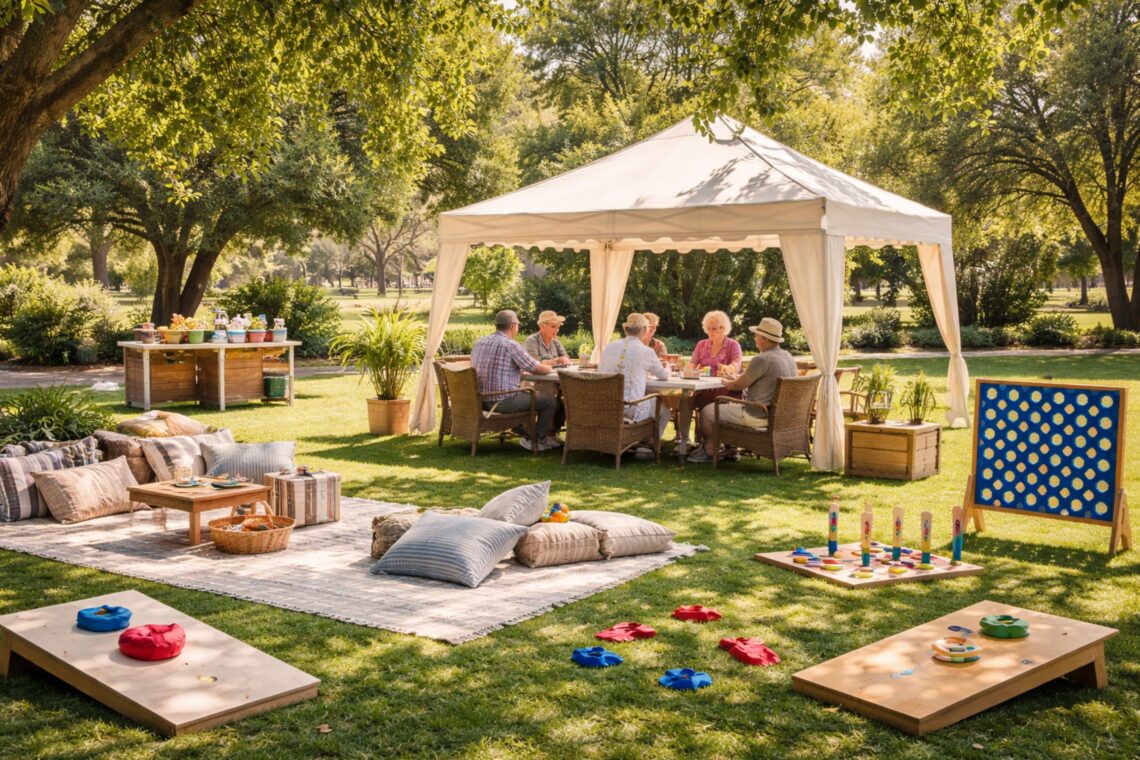
All games should be fully shaded for their entire duration. Tree shade is ideal if it remains consistent, but canopies provide more control. Avoid partial shade that shifts during play, as repositioning seating mid-game disrupts play and causes discomfort.
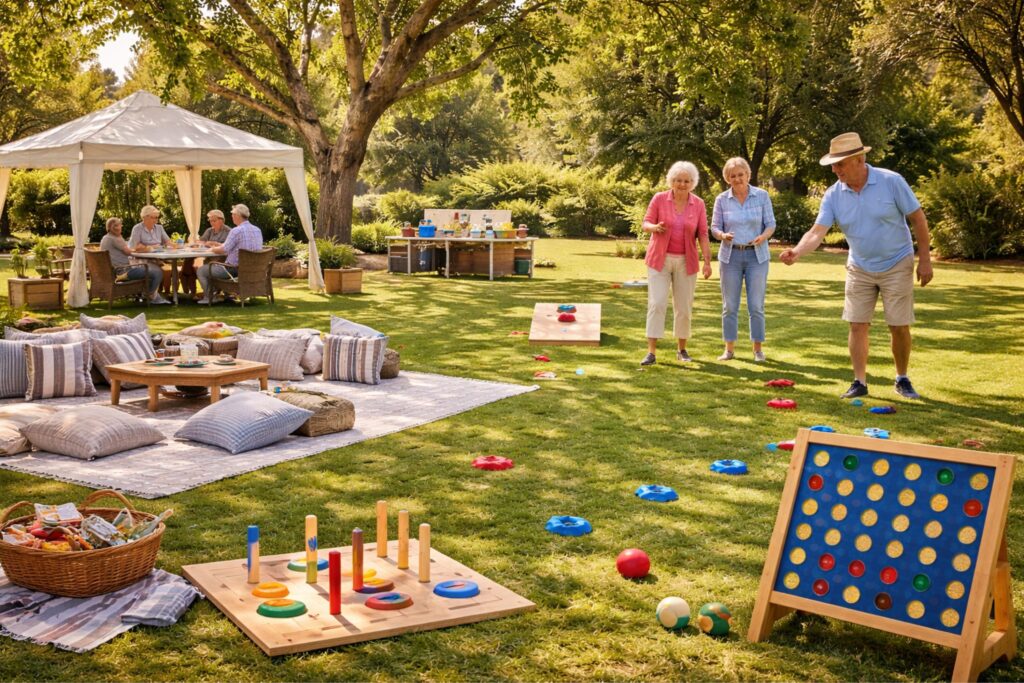
Seating layout directly affects participation. Chairs should be placed on stable ground with consistent spacing. Circular or semi-circular arrangements work best for senior picnic games because they reduce the need for head turning and improve communication. Avoid long rows or scattered seating that makes instructions hard to follow.
Tables should be positioned close to seating without blocking walkways. Standard-height tables work better than low picnic tables, which require more effort when sitting or standing. Leave enough clearance for walkers and mobility aids.
These layout choices also help activities transition smoothly when seniors are included alongside picnic games for mixed age groups, without creating discomfort or drawing attention to physical differences.
Managing wind, noise, & sightlines when setting up senior picnic games
Environmental distractions often limit how well senior picnic games function. Wind, background noise, and glare reduce engagement even when games are simple.
Wind affects lightweight game materials, cards, and paper-based activities. When planning how to set up senior picnic games, position tables near natural wind barriers such as fences, buildings, or dense landscaping. Avoid open hilltops or beach-facing areas unless all materials are secured.
Noise is a common issue in public parks. Nearby playgrounds, roads, or sports fields can overwhelm seniors, especially those using hearing aids. Choose quieter zones of parks whenever possible. In backyards, pause background music during game sessions to keep instructions clear.
Visibility matters more than decoration. Seating should never face direct sunlight, particularly in late afternoon. Position games so all participants have a clear line of sight to the facilitator and game area without glare or visual obstruction.
Set up senior picnic games around meals, rest, & energy levels
Timing plays a major role in setting up senior picnic games effectively. Seniors participate best when activities align with natural rest cycles.
Games should begin after guests have had time to eat and hydrate, typically 30 to 45 minutes after a meal. Starting too soon leads to discomfort, while waiting too long reduces interest. Avoid scheduling games during the hottest part of the day, usually early afternoon in most regions.
Each game should be limited to a short time window. Ten to fifteen minutes per activity is usually sufficient. Longer sessions increase fatigue and reduce attention. Build in breaks for water, conversation, and rest between games.
In parks, keep seating, restrooms, and hydration points close together. In backyards, place games near shaded rest areas or indoor access so guests can step away without disruption.
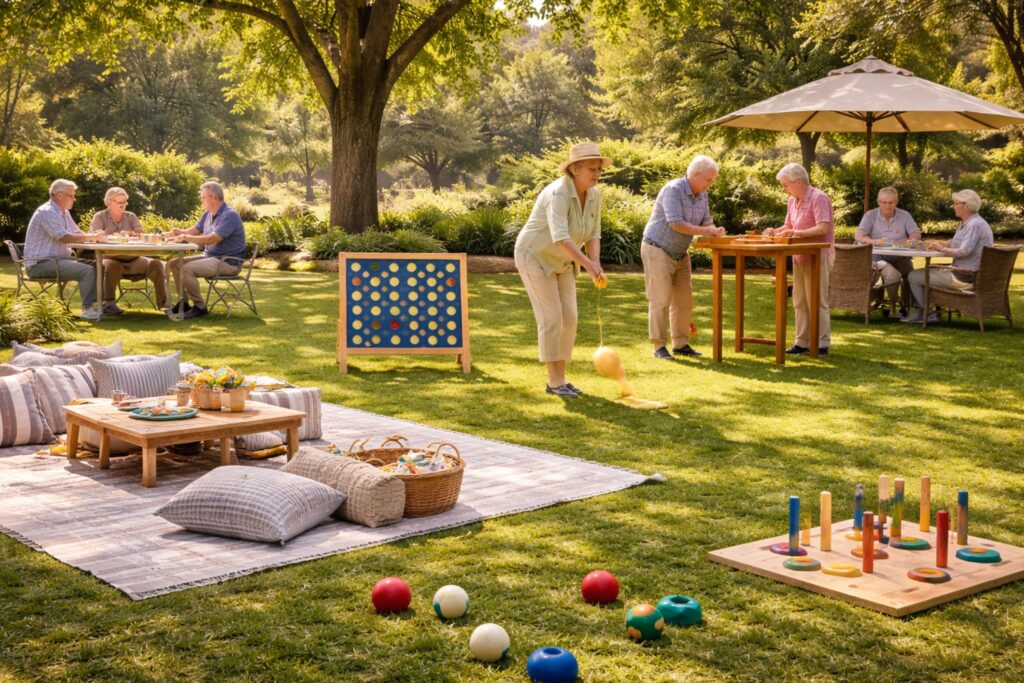
How senior picnic game setups differ between parks and backyards
The location type changes how senior picnic games should be set up. Parks and backyards come with different logistical constraints.
Public parks may require permits for reserved areas, canopies, or organized gatherings. Always confirm local regulations before planning layouts. Parking distance is another key factor. Senior picnic games should be positioned as close as possible to accessible parking to reduce walking time.
Backyards offer more control over noise and layout, but often limit space. Measure the usable area carefully and avoid overcrowding. Maintain clear walkways between seating, tables, and rest areas to prevent congestion.
In both settings, practical access to shade, restrooms, and water should guide placement decisions more than visual styling. This is why choosing a picnic location should prioritize shade coverage, restroom access, parking distance, and ground stability rather than visual appeal alone.
A practical setup checklist for senior picnic games
Setting up senior picnic games in parks and backyards works best when the environment is planned before the activities themselves. Stable surfaces, consistent shade, and clear seating layouts reduce physical strain and make participation easier.
Managing wind, noise, and visibility helps seniors stay engaged without frustration, while thoughtful timing around meals and rest periods prevents fatigue.
Differences between parks and backyards – such as permits, space limits, and access – shape how senior picnic games should be arranged. When these setup details are handled carefully, senior picnic games remain comfortable, accessible, and enjoyable from start to finish.
When these setup details are handled in advance, organizing a picnic for seniors becomes more predictable, comfortable, and easier to manage for hosts and guests alike.
FAQs
Are permits required for setting up senior picnic games in public parks?
Permit requirements depend on the park and the type of setup. Organized games, reserved areas, canopies, or large groups often require permits, especially in city parks. Always check local park regulations before planning senior picnic games to avoid restrictions or fines.
What type of seating works best for senior picnic game areas?
Stable chairs with firm backs and arm support work best for senior picnic game setups. Folding chairs without armrests or low picnic benches increase strain when sitting or standing. Seating should remain level and evenly spaced to support comfort and accessibility.
How much space should be planned per person for senior picnic games?
Senior picnic games require more spacing than standard picnic activities. Plan extra clearance between chairs, tables, and game areas to allow safe movement, mobility aids, and unobstructed walkways. Crowded layouts increase fatigue and fall risk.
Can senior picnic games be set up on uneven or sloped terrain?
Uneven or sloped terrain should be avoided whenever possible. Even small inclines affect balance and seating stability. If level ground is unavailable, limit activities to seated games and secure all furniture to prevent shifting.
How do mobility aids affect senior picnic game setup?
When seniors use walkers, canes, or wheelchairs, game areas must include wider pathways, stable surfaces, and unobstructed access to seating and tables. Planning for mobility aids early prevents last-minute layout changes.
What weather conditions make senior picnic games unsafe?
High heat, strong winds, and direct midday sun increase health risks for older adults. Senior picnic games should be postponed or relocated if shade cannot be maintained, temperatures rise above comfortable ranges, or wind interferes with visibility and balance.
Should senior picnic games be facilitated or self-guided?
Facilitated senior picnic games work better for larger groups or mixed abilities. A facilitator helps manage pacing, explain rules clearly, and adjust activities based on energy levels. Self-guided games are better suited for small, informal gatherings.
How early should senior picnic games be set up before guests arrive?
Senior picnic games should be fully set up at least 30–45 minutes before guests arrive. This allows time to test seating stability, adjust shade placement, and correct layout issues without rushing or disrupting participants.