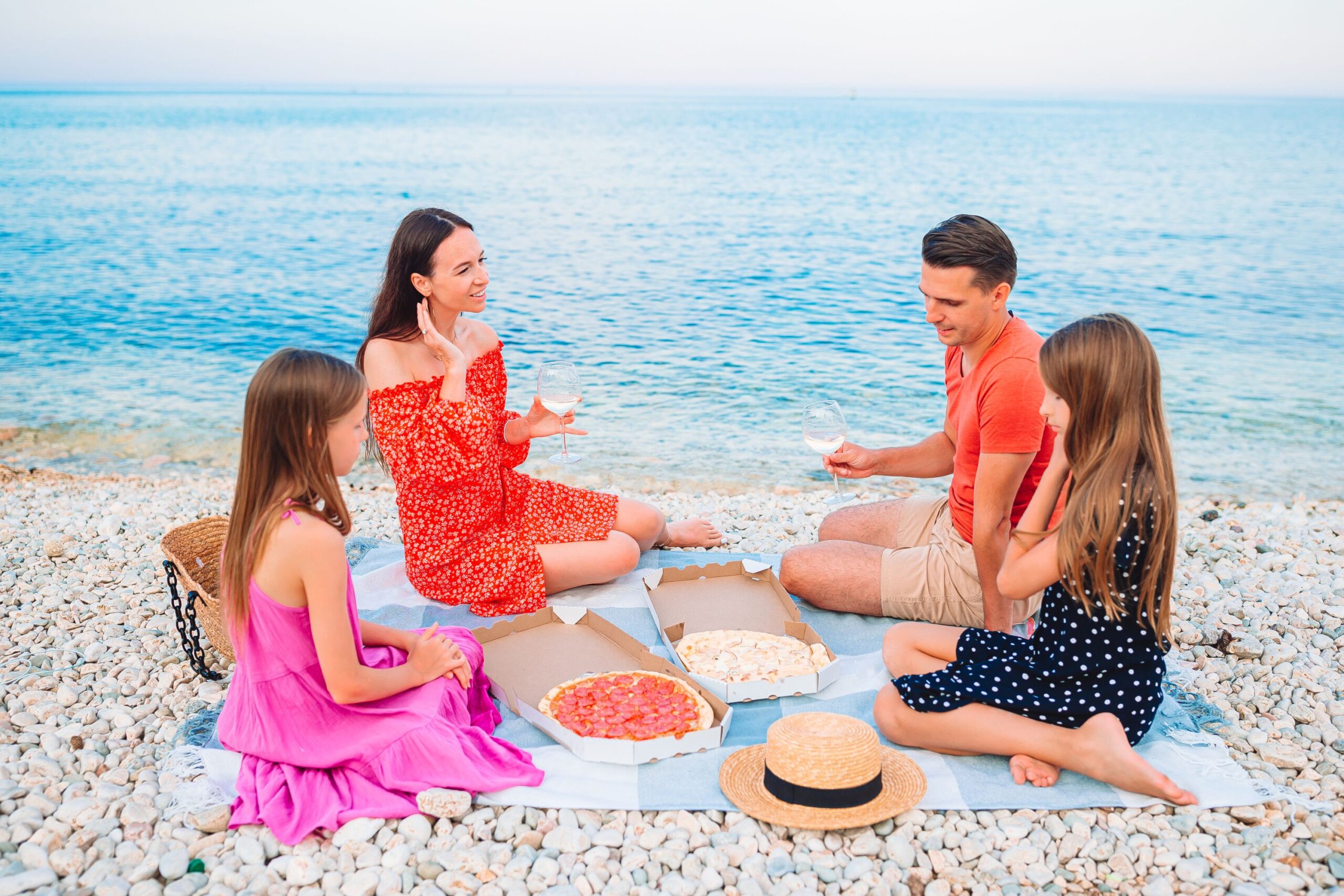
Tips for a Safe Picnic by the Water
A waterfront picnic sounds relaxing, but small mistakes can turn it stressful fast. A soaked blanket, sand in the food, or a gust that flips your umbrella can ruin the day.
Planning to eat near a lake, river, or ocean means thinking ahead—not just about location, but also shade, wind, and how to keep food safe.
This guide lists practical tips for picnicking by the water, including how to select the ideal spot, secure your setup, pack efficiently, and remain vigilant to potential hazards such as bugs, birds, and changing weather conditions.
Picnic Spot That’s Safe and Stable for Your Food
Don’t set up directly at the water’s edge—even when conditions seem calm. Tides can shift, boat wakes can surge without warning, and gusts of wind can carry sand or spray into your food.
To avoid a soggy blanket or scattered setup, choose a location that’s at least 10–15 feet away from the shoreline. If you’re at a beach, aim for a flat spot behind the high-tide line.
At lakes and rivers, find slightly elevated ground with firm, dry soil—not muddy patches that can turn slippery.
Natural windbreaks, such as shrubs, dunes, boulders, or tree lines, can shield your setup from strong gusts and provide shade.
Avoid low-lying spots that collect runoff or bugs, and check for anthills or nests before settling down.
If you’re picnicking near water access points (like kayak docks or boat ramps), stay clear of busy areas to avoid foot traffic, noise, or potential splash zones.
Before laying out your gear, scan the water: is swimming allowed? Are there posted warnings about currents or wildlife? This is especially important if you have kids or pets. Edges with uneven rocks, algae, or sudden drop-offs can be dangerous, even in shallow zones.
Bring a low, foldable picnic table or riser tray to keep your food, drinks, and electronics off the ground and away from sand, ants, or water splashes.
If the ground is uneven, use rubber feet or wedges to keep it level.
Secure Your Picnic Shade and Gear
Expect wind to be stronger and less predictable near water—especially on open beaches or lakesides. If you’re bringing a canopy, beach umbrella, or shade tent, you’ll need more than just basic pegs or poles.
Always bring weighted anchors, sandbags, or tie-down straps to keep everything secure. For sand-based setups, bury umbrella poles at least 12 inches deep and pack the hole tightly with wet sand.
For grassy or rocky areas, use ground stakes with cords and clip the guy lines to stable objects, such as coolers or backpacks, for added stability.
Skip lightweight travel blankets—they tend to blow around and bunch up. Instead, use a woven rug, water-resistant mat, or picnic tarp with corner loops.
Secure the corners with stakes, clips, or small gear bags filled with sand or rocks. This helps prevent tripping hazards and keeps your setup in place during breezy moments.
Keep all containers zipped or latched shut when not in use. Waterfront areas often attract insects and wildlife, such as seagulls, squirrels, raccoons, or ants—all of which are quick to raid an open chip bag or sandwich box.
Use hard-sided containers or cooler boxes with latches for items that are fragrant or fragile.
If you’re using light plates or paper napkins, add a small stone or clothespin to each to prevent them from flying off.
It’s a small detail, but it makes a big difference in windy settings and avoids unintentional littering.

Keep Your Waterside Picnic Food Cool and Clean
Picnics by the water often mean full sun exposure, and without proper planning, your food can spoil fast.
Use an insulated cooler or thermal picnic bag packed with multiple ice packs or frozen water bottles.
Layer your food tightly inside—less air space helps maintain a cold interior longer.
If you’re out for more than a few hours, consider using two coolers: one for perishables, the other for drinks, so you don’t keep opening the food container.
Choose foods that stay safe and appetizing at outdoor temperatures. Good options include:
- Grilled wraps with chicken, roasted veggies, or turkey
- Hard or semi-firm cheeses like cheddar or gouda (wrap individually)
- Sealed hummus packs or nut butters
- Whole fruits like apples, pears, grapes, or oranges (prewashed and stored dry)
Avoid anything that melts or turns quickly, such as soft cheeses, mayonnaise-heavy salads, custards, or chocolate-based desserts.
Pack all food in leakproof, airtight containers—preferably ones that stack neatly and resist tipping. If you’re bringing anything warm, wrap it in foil and insulate it inside a thermal pouch to help it retain heat for the first hour or two.
Bring two sealable trash bags: one for food scraps and packaging, and another for recyclables. Tuck them into a side pocket so they’re easy to grab after the meal.
Also bring a few zip-top bags for leftovers, and a small cloth or pack of wipes for cleaning sticky fingers before and after eating.
Set up your cooler and food containers in a shaded area—either under your umbrella, or on the shaded side of your blanket.
Direct sunlight will warm even insulated containers within an hour, especially on hot surfaces like sand or pavement.

Picnic Water Safety for Kids and Pets
When picnicking near water with children or pets, setting clear boundaries is non-negotiable. Even shallow areas can hide strong currents, sharp rocks, or sudden drop-offs.
Start by defining the space: use bright cones, a beach umbrella, a rolled-up towel, or a small portable fence to create a visible “no-go” zone between your picnic area and the water.
This not only reminds little ones where it’s safe to play—it helps adults keep visual control.
For kids, life vests or puddle jumpers are a smart idea, especially if you’re near a river or ocean where conditions can change quickly.
Always assign a supervising adult—not just “watch everyone”—but designate one person to stay alert when kids are near the shoreline.
Foot protection is essential. Pack water shoes or sandals with grippy soles to protect feet from hot sand, broken shells, fishing hooks, or glass fragments that are common near public lakefronts and beaches.
Bring a small dry bag or waterproof tote and keep it within easy reach. It should contain:
- A basic first aid kit (including tweezers for splinters or ticks)
- Spare towels and a change of clothes
- Reef-safe sunscreen and aloe gel
- A whistle or small signal in case of separation
If you’re bringing a dog, don’t assume they can hydrate safely from the environment.
Ocean water can cause dehydration and salt poisoning, while lake or river water may contain bacteria, algae, or pollutants from runoff.
Pack bottled water and a collapsible bowl, and set up a shaded spot for them to rest. Consider using a long leash anchored to your setup to give them room to relax without the risk of wandering off.

Stay Aware of Weather and Wildlife at Your Waterside Picnic
Check the local weather forecast before heading out—don’t just rely on a glance at the sky. Conditions near water can shift fast.
Thunderstorms, high winds, and sudden temperature drops are common, especially in the late afternoon.
Use a reliable radar weather app (like Windy, MyRadar, or AccuWeather), and turn on push alerts for your exact location. If the forecast shows even a slight chance of storms, pack up all items for the picnic early rather than wait it out.
High winds can also knock over umbrellas, scatter supplies, and blow sand or debris across your setup. Be ready to adjust or pack down quickly if gusts pick up.
For longer outings, bring a lightweight emergency poncho or windbreaker, just in case.
Wildlife is another factor that many people underestimate in areas near lakes, rivers, and coastal regions. Seagulls, raccoons, squirrels, ducks, and insects are opportunistic and persistent.
Feeding them—even crumbs—can lead to swarms or aggressive behavior. Once animals associate picnics with food, they’ll return repeatedly and may even damage gear.
If you’re in a more wooded or marshy area, stay alert for snakes, ticks, or wasps, especially during late spring and summer.
Keep your picnic area compact, with blankets tucked in, and don’t let towels or bags drag into tall grass or brush.
Use citronella wipes, unscented insect repellent, or a clip-on fan repellent to reduce insect activity around your space.
Before you pack up, shake out all fabrics, check under your blanket, and give bags a thorough inspection—especially if you’ve been near sandy soil, tall grass, or wooded areas.
It’s a quick step that helps prevent surprises when you unpack at home.
Checklist: Safe Picnic Setup by the Water
| Item | Why It Matters |
| Water-resistant picnic blanket | Keeps your base layer dry even if the ground is damp or humid |
| Woven rug or mat with corner weights | Prevents shifting in the wind and adds structure to your picnic setup |
| Cooler with ice packs | Keeps food safe and cold in direct sun for several hours |
| Stackable, leakproof containers | Protects food from spills, bugs, and sand |
| Shade device (umbrella/canopy) + anchors | Provides sun protection; anchored setup prevents blow-aways |
| Drybag with first-aid essentials | Keeps emergency items like bandages, wipes, and spare clothes dry and ready |
| Trash + recycling bags (2) | Helps manage waste responsibly and avoid animal or insect attraction |
| Portable picnic table or tray | Keeps food and drinks off the ground, away from splash zones and insects |
| Collapsible pet water bowl + bottled water | Keeps pets safely hydrated—natural sources may be unsafe |
| Water shoes / sandals with grip | Protects feet from sharp debris, hot sand, or slippery rocks |
| Insect repellent or citronella wipes | Helps deter mosquitoes, ants, and ticks near water or wooded areas |
| Weather app with local radar alerts | Allows quick response to changing weather conditions |
| Whistle or signal device (for kids) | Provides a safety cue in crowded or expansive locations |
| Spare towels + change of clothes | Helpful for unexpected splashes, muddy spots, or staying dry after a swim |
FAQs
What’s the safest distance to set up from the water?
Stay at least 10 to 15 feet back from the edge of a lake, river, or ocean. This buffer helps protect your setup from rising tides, boat wakes, or sudden shifts in wind and water levels.
How can I keep my picnic umbrella from blowing away?
Use sand anchors, tie-down straps, or weighted bags at the base. If you’re on soft ground, dig at least 12 inches down and pack sand tightly around the pole.
Are there any foods I should avoid for a waterfront picnic?
Yes—skip mayo-based salads, soft cheeses, and anything that melts or spoils quickly. Instead, pack items that stay stable in heat, such as wraps, grilled vegetables, firm cheeses, and whole fruit.
Is it okay to let my dog swim during a picnic?
Only if local rules allow it and the water is clean. Watch for signs of strong current, sharp rocks, or algae. Dry your dog off before they rejoin the picnic to avoid soaking your setup.
What’s the best way to keep bugs away?
Use covered food containers, citronella wipes or candles (if allowed), and avoid sugary drinks in open cups. Also, keep trash sealed and out of sight from your main seating area.


You May Also Like

What Essentials to Take for Picnic?

Birthday Picnic Ideas for Adults
